
Meld Studio's Spark Feature: The AI Tool Dividing the Streaming Community
Meld Studio recently dropped something that set the streaming world on fire. Spark is an AI-powered tool built on Google Gemini, designed to let streamers build custom overlays, alerts, and widgets without writing a single line of code.

So, What Exactly Is Spark?
At its core, Spark is a prompt-based creation tool. You describe what you want, and it builds it for you. Want a Y2K-themed chat overlay? Done. A speed square graphic in the corner of your stream? It'll give it a shot. Normally, pulling off that kind of customization meant heading to platforms like Nerd or Die or Streamlabs Desktop and either buying pre-made assets or knowing enough code to build your own. Spark cuts that process down to a text prompt.
The tool supports a solid range of stream elements including chat overlays, stream alerts across iOS and other platforms, interactive chat games like Pong, lower thirds, and more. It also comes with a gallery of pre-made elements if you want a head start.
What Does It Cost?
Spark runs on a tiered model. The free plan gives you a limited number of tokens per month, which resets each month. That's honestly enough for most casual streamers who set up their overlays once and never touch them again. If you're someone who constantly refreshes your stream's look, you're probably looking at the paid tiers:
- Spark Pro at $20/month gets you extended requests and priority processing
- Spark Max at $60/month gives you the highest priority processing and the most capable Spark models available
Sixty dollars a month is a real commitment for AI-generated stream assets. But for high-volume creators or production-focused streamers, that math might make sense.
Why People Are Upset, And Why That Makes Sense
The backlash was immediate. And it's understandable. AI tools like this sit at a complicated intersection. They're genuinely useful, but they don't exist in a vacuum. Artists, designers, and coders who've built careers around creating stream assets now have to reckon with a tool that lets anyone replicate their work through a text box.
There's also a real business impact to consider. Overlay marketplaces that sell pre-made stream graphics could see their customer base shrink if streamers can simply generate something similar for free. That's not a hypothetical concern. It's a legitimate shift in how people might spend money in this space.
No one is wrong for feeling that way. These are real occupations and real livelihoods being affected by something that wasn't there a short while ago.
Meld Studio's Response
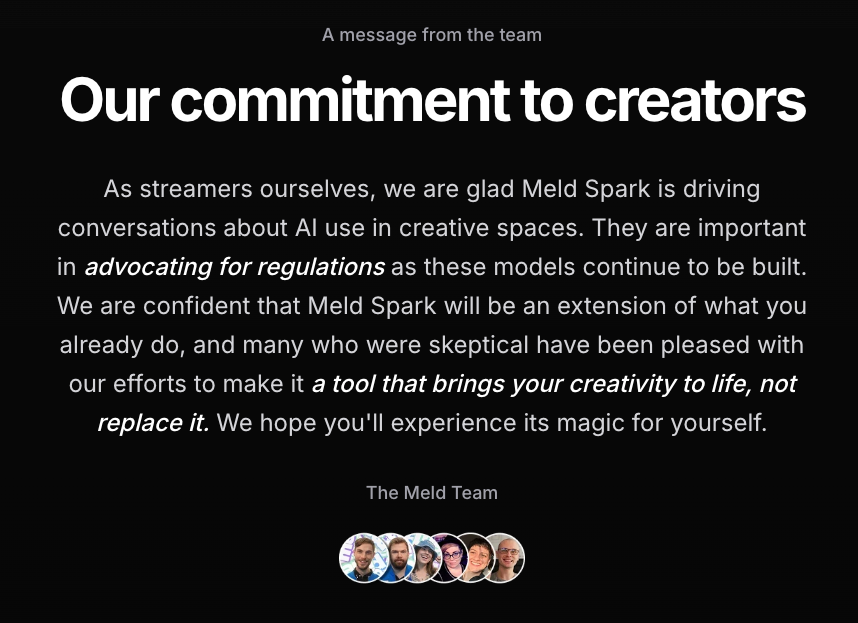
To their credit, Meld Studio put out a transparency report addressing the concerns head-on. Their position is that Spark is meant to extend a streamer's creativity, not replace the human behind it. They've also said they're advocates for AI regulation as these models continue to develop.
After testing it out personally, Spark does largely deliver on what it promises. It's not perfect. The vector graphics can be a little rough around the edges, but it does what it says. Prompt in, widget out.
The Bigger Picture
Here's the honest truth about AI tools like this: they're out in the world now. There's no putting that back in the box. That doesn't mean everyone has to love it or use it. Being against AI in spaces where it displaces human work is a completely valid stance. The concern is real, and it deserves real conversations about regulation.
But if you think of Spark as a tool rather than a replacement for craft, it starts to make more sense. The best streamers will still bring something a prompt can't replicate: personality, taste, and vision. Spark can help execute that vision faster. Whether that trade-off is worth it is a decision every creator has to make for themselves.
Meld Studio itself remains a solid platform for building out your stream setup, even if you never touch Spark. The non-AI side of things offers a clean, plugin-free alternative to OBS for managing your layout and widgets.
Are you going to give Spark a try, or are you keeping AI out of your stream setup? Drop your thoughts in the comments.
Written by

Subscribe to my newsletter
Subscribe to my newsletter to get the latest updates and news






Member discussion